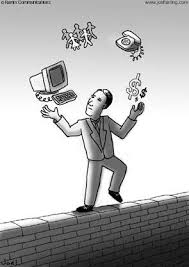
Primary schools today have begun to adapt their curriculum in order to include reasoning and/or critical thinking skills. This will become important in preparing our children for the world beyond the classroom and their understanding of the curriculum provided for them. According to June Pelligrini, of the Yale-New Haven Teacher Institute, “Higher order thinking skills are now recognized as important for those who will enter the twenty-first century work force, where the information age will require individuals who are flexible, dynamic, and resilient.” The Yale-New Haven Teacher Institute provides a model of how higher learning can support the concept of a child learning reason/logic at an early age.

In 1956, Benjamin Bloom, an education scholar developed a classification for levels of intellectual behavior in learning; it is known as Bloom’s Taxonomy. Teacher Tap, a professional resource online for educators/librarians states, “This taxonomy contains three overlapping domains: the cognitive, psychomotor, and affective.” It was Bloom’s belief that these domains are used in our behaviors of learning. In this video below an eleven-year-old girl guides her classmates in a discussion about another peers work. She actively engages them in a partner debate of critical/creative thinking. This demonstrates that if allowed a child can grasp the concept of reason and critical thinking. It is important that every child have the chance to comprehend their reasoning skills as well and know that in their world of authority it will be honored.
<object width="480" height="385"><param name="movie" value="http://www.youtube.com/v/FhvaDFwmfBY?fs=1&hl=en_US"></param><param name="allowFullScreen" value="true"></param><param name="allowscriptaccess" value="always"></param><embed src="http://www.youtube.com/v/FhvaDFwmfBY?fs=1&hl=en_US" type="application/x-shockwave-flash" allowscriptaccess="always" allowfullscreen="true" width="480" height="385"></embed></object>
Critical thinking and reasoning skills will become an important aspect of a child’s education in a world of technology and cyber-socializing. Howard Rheingold, a critic and writer believes, “the teachable skill of knowing how to make decisions based on values has become particularly important with the new medium that connects young people to each other and to the world’s knowledge…” As a parent in today’s world the struggle is to retain a balance of my children’s understanding of how they feel and think about life around them. If school won’t aide them in learning this tool, then parents should see fit to teach these skills at home. The only problem is bias framing a parent’s way of expressing critical thinking. Perhaps this is why there is not more emphasis on the subject for primary aged children.
As our society battles the ever-growing question of whether our children are prepared for the world around them, the question that most needs answering is why not? Why not offer children every benefit that their brains can gain from thinking about thinking? We prepare them for every aspect of life except for that. It should be seen as unethical for schools to not allow for critical thinking and reasoning skills to be utilized. If this were true then standardized testing could be obsolete, but then who wants to open that can of worms? Reaching for the can opener…while testing is necessary to gage one’s level of knowledge and comprehension, it is unnecessary to use it as a guide for curriculum. Those who believe that hardcore testing is the only way would be the ones who also believe a child cannot grasp critical thinking.
 Works Cited
Johnson, Larry, and Annette Lamb. "Bloom's Taxonomy of Learning Domains." Colocation | Broadband Wireless | Dedicated Servers | Web Design & Development | DocSTAR | DSL | Web Hosting | Infinity Internet. 2000,2007. Web. 26 Oct. 2010. <http://www.nwlink.com/~donclark/hrd/bloom.html>.
Rheingold, Howard, and Robin Good. "New Media Literacy In Education: Learning Media Use While Developing Critical Thinking Skills." Professional Online Publishing: New Media Trends, Communication Skills, Online Marketing - Robin Good's MasterNewMedia. 28 Oct. 2007. Web. 26 Oct. 2010. <http://www.masternewmedia.org/learning_educational_technologies/media-literacy/new-media-literacy-critical-thinking-Howard-Rheingold-20071019.htm>.